

MD Termite Season
Maryland Termite Season: What Southern Maryland Homeowners Need to Know Before the Damage Is Done

There are a lot of things Marylanders look forward to as winter fades and spring arrives. Warmer temperatures. Longer days. The smell of the Bay on a good breeze. Crab season on the horizon.
Termite season is not on that list.
But whether you're looking forward to it or not, termite season in Maryland arrives every year like clockwork — and for homeowners in Southern Maryland, it represents one of the most serious and financially damaging pest threats of the entire calendar year. The difference between catching it early and catching it late can be tens of thousands of dollars in structural repairs.
Here's what you need to know.
When Is Termite Season in Maryland?
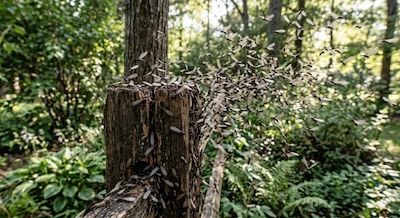
Termite season in Maryland typically begins in late March and runs through early summer, peaking between April and June when temperatures warm and humidity rises. This is when termite colonies send out their swarmers — winged reproductive termites whose sole job is to leave the nest, find a mate, and start a new colony somewhere nearby.
Somewhere nearby, in many cases, means your house.
Swarmers are often the first visible sign that termites are active in or around your property. They look similar to flying ants, emerge in large numbers usually after a warm rain, and are frequently spotted around windows, doors, and light sources. If you see what looks like a cloud of winged insects pouring out of your walls, your soil, or your wood framing — that's not a good day.
The swarmers themselves don't cause structural damage. But their presence is a clear signal that a mature colony is established nearby, and worker termites — the ones doing the actual chewing — have likely already been at work for months or years.
Why Maryland Is Prime Termite Territory
Maryland's climate is close to ideal for the eastern subterranean termite, the most common and destructive termite species in the eastern United States and the one responsible for the overwhelming majority of termite damage in Southern Maryland.
A few factors make our region particularly hospitable:
- Humidity. Termites need moisture to survive. Maryland's proximity to the Chesapeake Bay, the Potomac River, and the region's countless tidal creeks and wetlands keeps humidity levels elevated, especially in St. Mary's, Calvert, and Charles counties. Southern Maryland homes — particularly older ones with crawl spaces, wood-to-soil contact, or moisture issues in the foundation — are especially attractive targets.
- Warm winters. Unlike the northern part of the country where extended hard freezes keep termite activity suppressed, Southern Maryland's relatively mild winters allow colonies to stay active at deeper soil levels year-round. They don't truly stop — they just slow down until spring gives them a reason to speed back up.
- Abundant wood. Between mature hardwood forests, older wood-frame construction, untreated fence posts, wood mulch against foundations, and firewood stacked against the house, Southern Maryland properties give termites plenty to work with.
The Eastern Subterranean Termite: Know Your Enemy
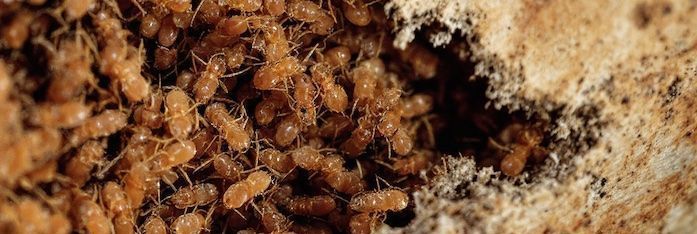
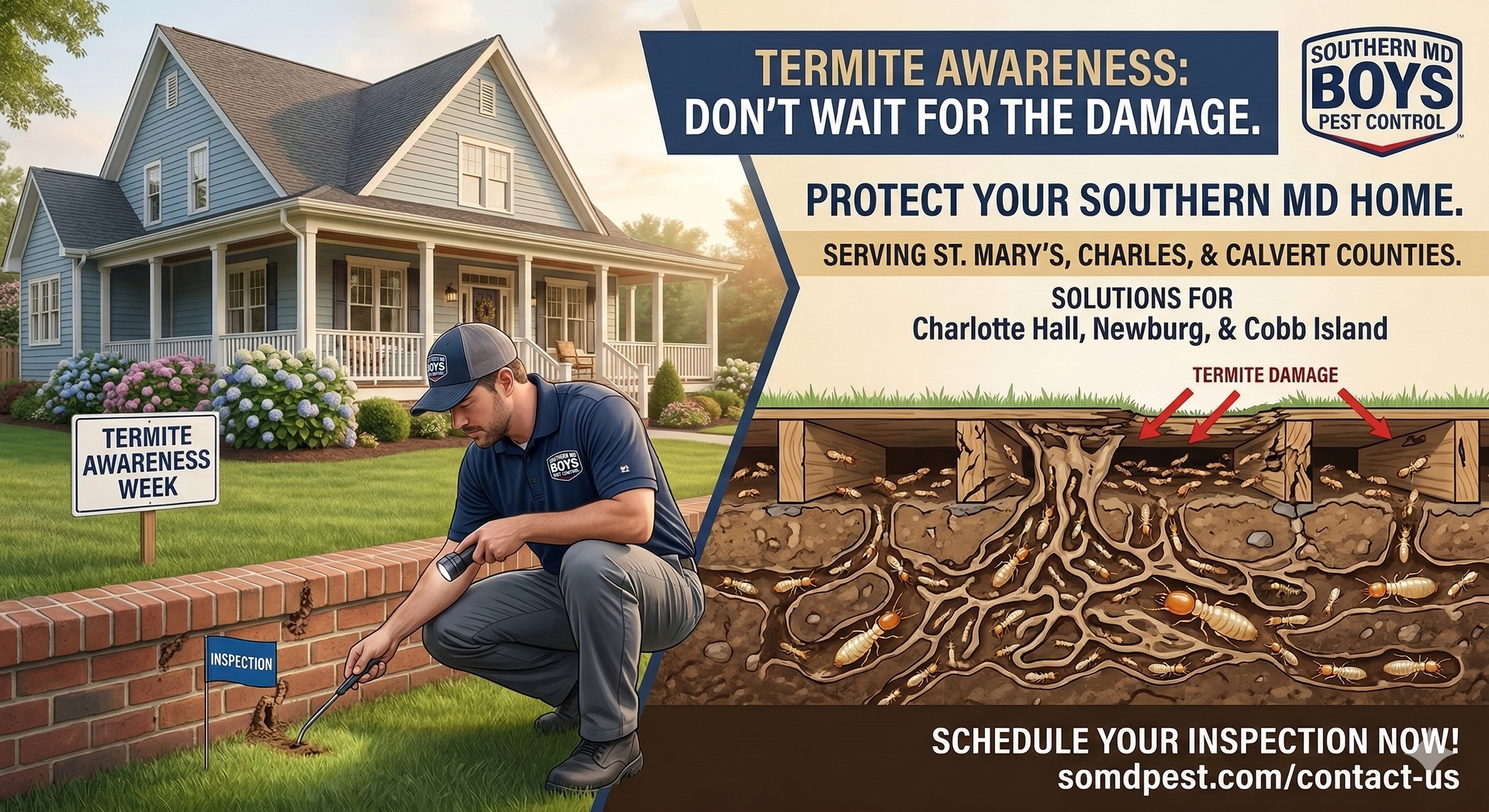
The eastern subterranean termite (Reticulitermes flavipes) lives in underground colonies that can contain hundreds of thousands to over a million individual termites. They build mud tubes — pencil-width tunnels of soil, wood particles, and saliva — to travel between their underground nest and their food source above ground while staying protected from open air and predators.
These mud tubes are one of the most reliable signs of an active infestation. Check your foundation walls, crawl space piers, floor joists, and any wood that makes contact with or comes close to the soil. If you find what looks like a thin ribbon of dried mud running up a concrete block or along a wooden beam, do not ignore it.
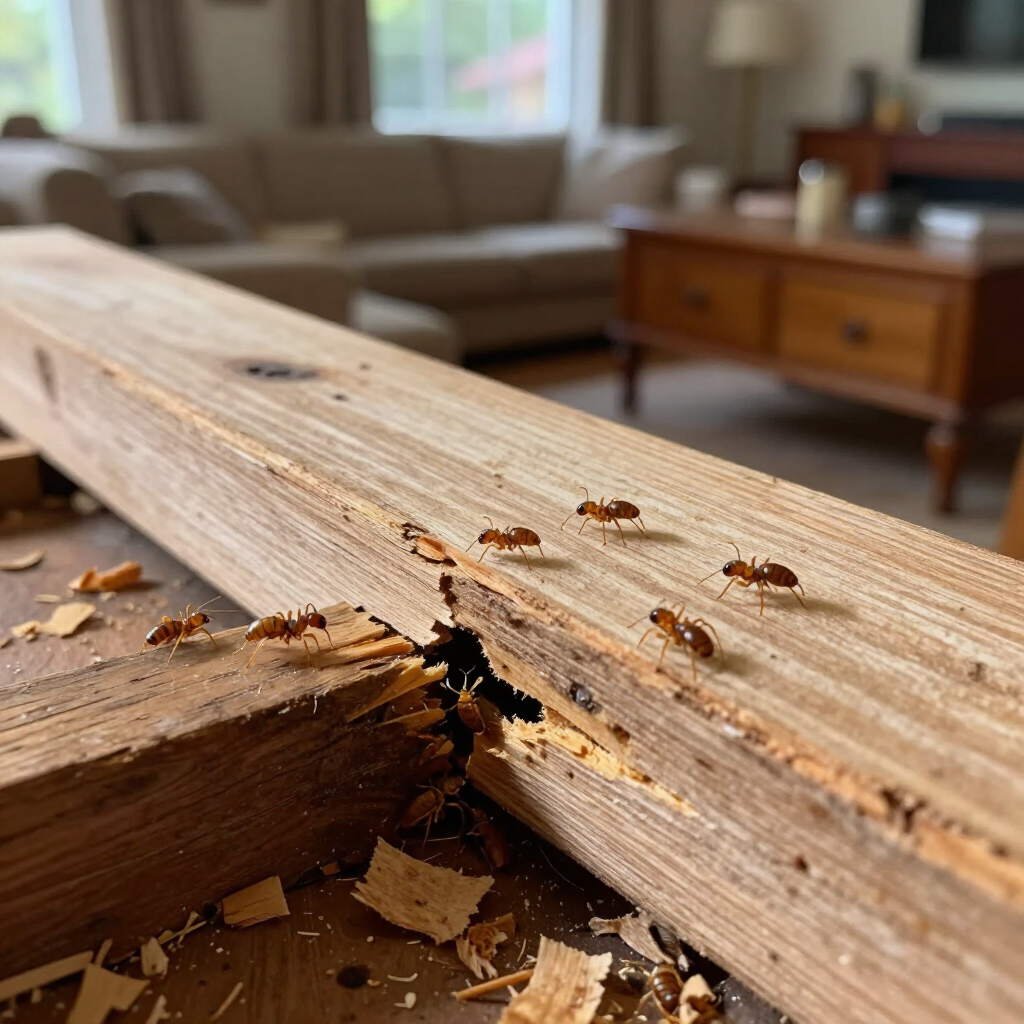
Worker termites feed 24 hours a day, seven days a week. A mature colony can consume roughly a pound of wood per day. Over months and years, this adds up to hollowed-out floor joists, compromised support beams, damaged subflooring, and in severe cases, structural failure.
The most alarming part? Most of the damage happens completely out of sight, inside walls and below floors, long before any visible signs appear on the surface.
Signs You May Have a Termite Problem
You don't always get the dramatic swarmer event as a warning. More often, termite infestations are discovered during a home inspection, a renovation, or when something that shouldn't give way suddenly does. Here are the signs to watch for:
- Mud tubes. As described above — thin, dried mud tunnels running along your foundation, piers, or framing members.
- Hollow-sounding wood. Tap on baseboards, door frames, and floor joists. Wood that has been hollowed out from the inside will have a distinctive papery, empty sound.
- Blistered or bubbling paint. Termite activity below the surface can cause paint to bubble or blister in ways that mimic water damage.
- Tight-fitting doors and windows. As termites damage wood framing, it can warp and shift, causing doors and windows to stick or no longer close properly.
- Frass. Drywood termites — less common in Maryland but present — leave behind small pellet-like droppings called frass near the wood they're consuming.
- Discarded wings. After swarmers mate, they shed their wings. Finding small piles of translucent wings near windowsills, door frames, or light fixtures is a strong indicator that swarmers have recently been active inside or immediately outside your home.
What a Professional Termite Inspection Actually Looks Like
A lot of homeowners assume that if they haven't seen anything obvious, they don't have a termite problem. This is one of the most dangerous assumptions you can make as a Southern Maryland homeowner.
A professional termite inspection from Southern MD Boys Pest Control goes well beyond a quick visual scan. We check:
- The full perimeter of your foundation for mud tubes and signs of entry
- Crawl spaces and basements for evidence of active feeding and moisture conditions that attract termites
- Attic spaces and roof structures where applicable
- All accessible wood framing, floor joists, sill plates, and support beams
- Exterior wood features including decks, porches, fences, and outbuildings
- The soil grade around your foundation for wood-to-soil contact points
We also provide WDI (Wood Destroying Insect) reports for real estate transactions — a requirement for most Maryland home sales that needs to be completed before closing. If you're buying or selling a home in St. Mary's County, Calvert County, or Charles County, we can turn those around quickly.
Treatment Options: What Works and What Lasts
Not all termite treatments are created equal. Southern MD Boys Pest Control offers two primary treatment approaches depending on the situation:
Liquid barrier treatment. A termiticide is applied to the soil around and beneath your foundation, creating a continuous chemical barrier that kills termites as they attempt to cross it. This approach works well for active infestations and provides long-lasting protection when applied correctly.
Bait systems. Termite bait stations are installed in the soil around your home's perimeter. Worker termites find the bait, feed on it, and carry it back to the colony — eventually eliminating the colony from the inside out. Bait systems are a lower-disruption option that works well for ongoing monitoring and prevention.
In some cases a combination of both approaches is the most effective strategy, particularly for larger properties or homes with significant conducive conditions like crawl spaces with high moisture.
What You Can Do Before We Arrive
While there's no substitute for a professional inspection and treatment, there are steps every Southern Maryland homeowner can take to reduce their termite risk:
- Eliminate wood-to-soil contact. Any wood that touches the ground directly — fence posts, deck supports, siding that runs to grade — is an open invitation. Where possible, use concrete or metal barriers between wood and soil.
- Fix moisture problems. Leaky gutters, poor drainage, and crawl space moisture issues all create conditions termites love. Address them.
- Move firewood away from the house. Stacking firewood against your foundation is essentially building a termite welcome center. Keep it elevated and at least 20 feet from the structure.
- Don't pile mulch against your foundation. Wood mulch holds moisture and gives termites easy access to your foundation. Keep a clear zone of several inches between mulch beds and your home's exterior.
- Schedule an inspection. Especially if you've never had one, if you're buying or selling, or if it's been more than a year since your last professional check.
Don't Wait for the Swarm
The most common mistake Southern Maryland homeowners make with termites is waiting for an obvious sign before taking action. By the time you see swarmers pouring from your walls or discover soft spots in your flooring, the colony has been working on your home for a long time.
Annual inspections aren't overkill — they're the single most effective thing you can do to protect your most valuable asset from one of its most persistent and costly threats.
Southern MD Boys Pest Control serves all of Southern Maryland, including St. Inigoes, Lexington Park, California, Ridge, Leonardtown, Great Mills, and the surrounding communities of St. Mary's, Calvert, and Charles counties. We're local, we're licensed and insured, and we have 154 five-star reviews from Southern Maryland homeowners who trust us to protect their homes.
Call us at 443-802-1022 or visit somdpest.com to schedule your inspection. Free estimates, no pressure, just straight answers from people who know Southern Maryland pest control inside and out.
Termite season is coming. The question is whether you're ready for it.
It's Maryland Termite Season, Don't let them become the new state bird! "We love our state heritage, but this isn't the kind of 'Maryland Pride' we want in your home. If the termites are big enough to have their own ZIP code, it’s time to call the Boys. 🦀🚫"
#SouthernMDBoysPestControl #SoMDBoys #LocalPestControl #PestControlExperts #termitecontrol #marylandtermites
Contact Us