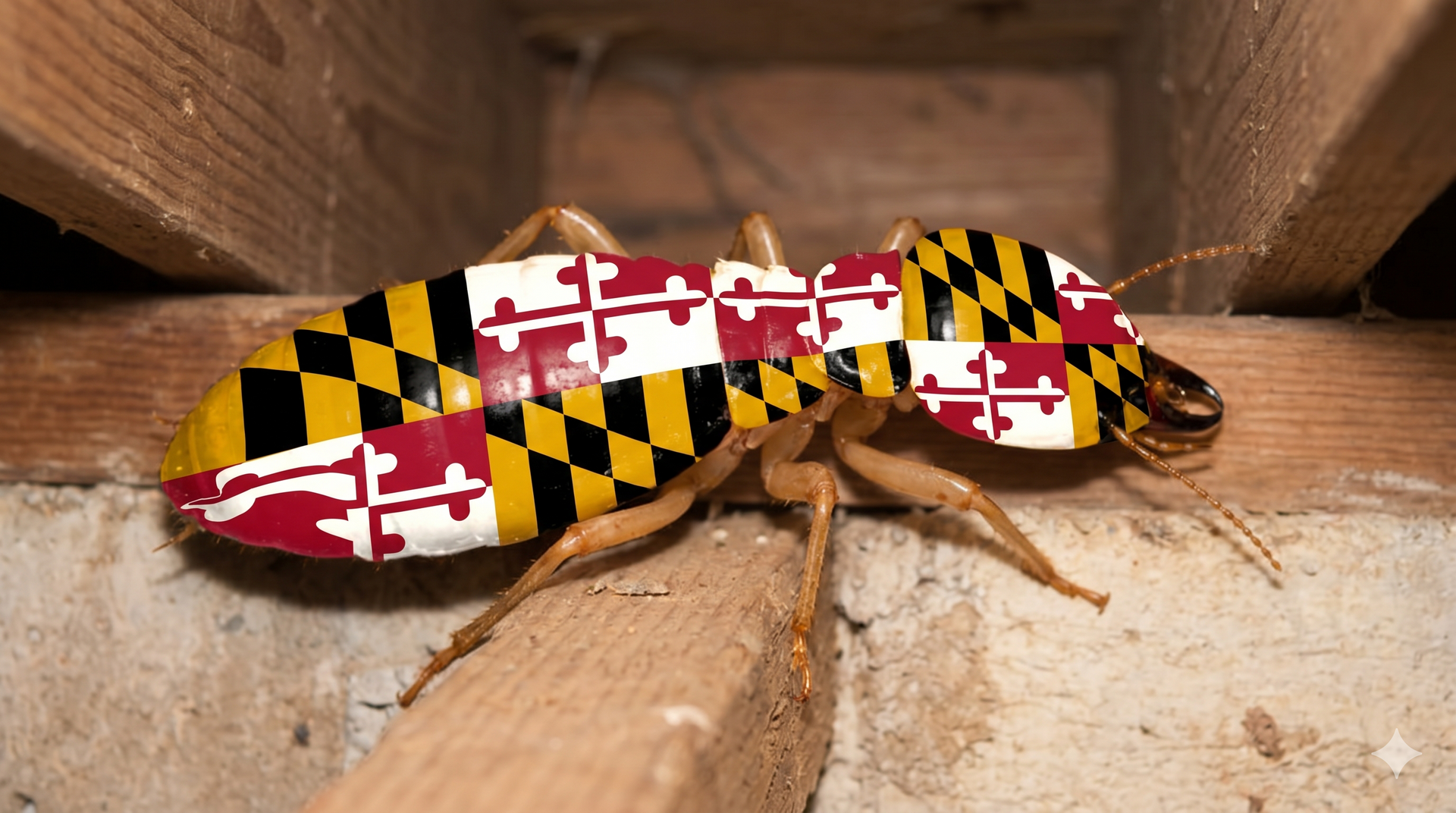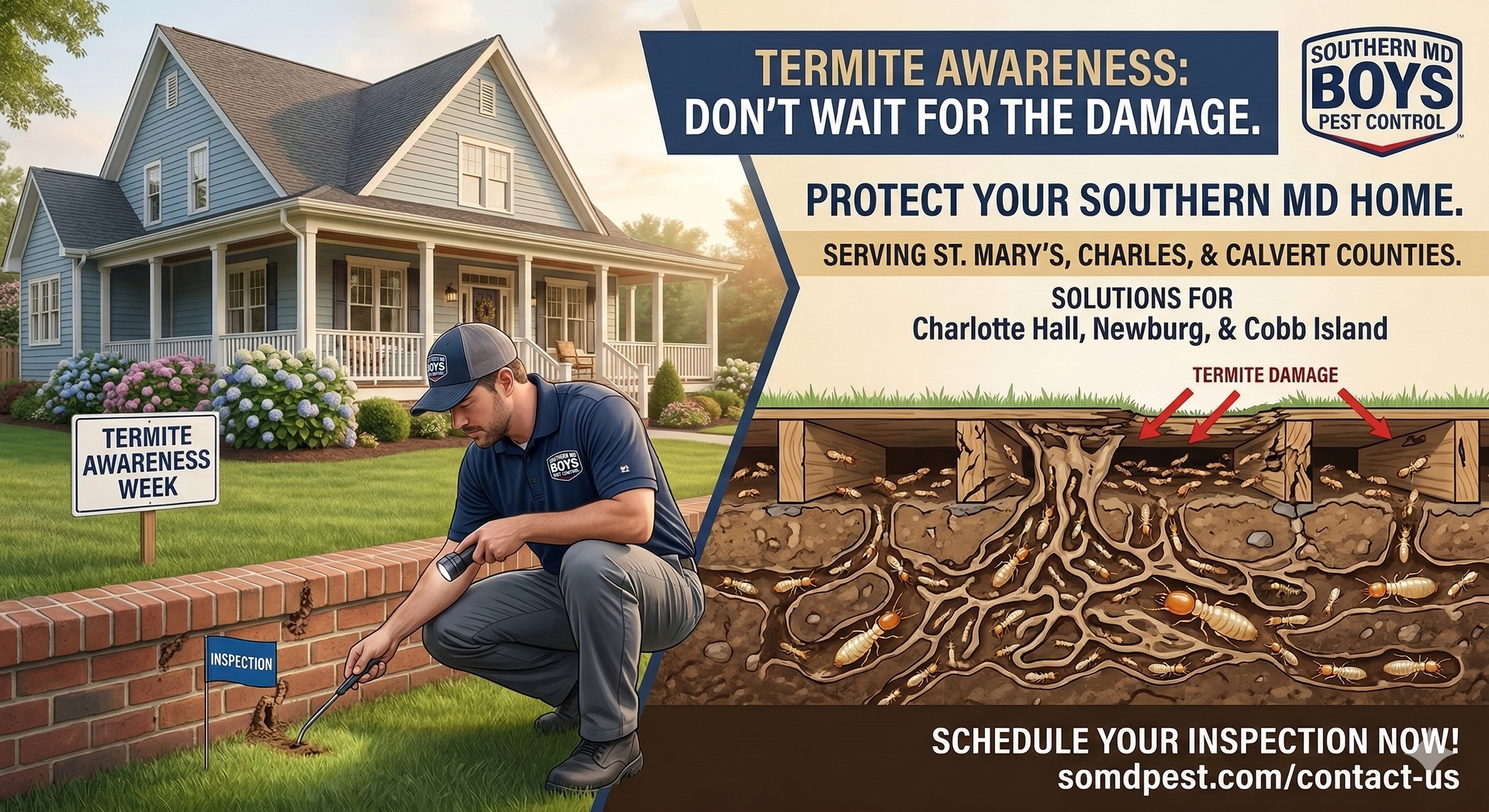


Termites cost American homeowners more than $5 billion in damage every year. They don't make noise. They don't show themselves. And by the time most Calvert County homeowners discover them, the damage has already been done — sometimes for years.
We've been treating termite infestations in Calvert County for nearly three decades. We've seen what a colony discovered in year one looks like versus what it looks like in year five. The difference isn't just the repair bill — it's whether you're dealing with a treatment job or a structural renovation. The gap between those two outcomes is almost always whether someone called us early or called us late.
This post covers what you need to know: why Calvert County is especially high-risk, how to spot the warning signs before significant damage occurs, what termite swarm season actually means for your home, and what a professional inspection covers that a self-inspection misses.
Why Calvert County Is High-Risk Termite Territory
Maryland as a whole has significant termite pressure — the state sits squarely in the moderate-to-heavy termite infestation zone on the national risk map published by the USDA. But within Maryland, Calvert County has conditions that push it toward the higher end of that risk range.
The Chesapeake Bay Humidity Effect
Eastern subterranean termites — the species responsible for virtually all termite damage in Calvert County — require moisture to survive. They can't travel through open air; they move through the soil and build mud tubes to protect themselves from desiccation. The consistent coastal humidity along the Bay and Patuxent River keeps the soil conditions ideal for termite activity year-round, including during Maryland's colder months when many homeowners assume termite risk goes away. It doesn't. Subterranean termite colonies don't go dormant in winter — they simply move deeper into the soil and continue feeding on wood in contact with the ground.
The Forest and Wood-to-Soil Contact Problem
Calvert County's forested landscape means enormous amounts of naturally occurring cellulose — dead wood, tree stumps, buried wood debris, and leaf litter — that sustain large termite populations in close proximity to homes. The closer a home is to a tree line, the more termite pressure it faces. And in communities like Chesapeake Ranch Estates, Drum Point, areas of Lusby, and much of St. Leonard, the tree line is the backyard.
Add to that the older housing stock in many parts of the county — where fence posts, deck footers, stair stringers, and landscaping timbers have been in ground contact for decades — and you have ideal conditions for colonies to establish themselves right at the foundation.
Real Estate Turnover Blind Spots
Calvert County's waterfront and semi-rural appeal drives consistent real estate activity. We've inspected homes for buyers whose sellers had no idea a termite colony was active — not because they were hiding it, but because the damage was entirely inside a wall or beneath a floor where no one had looked. A home inspection performed by a general inspector is not a termite inspection. The WDI (Wood Destroying Insect) report is a separate, specialized inspection — and skipping it before closing on a Calvert County home is a meaningful financial risk.
"A termite colony can go undetected for three to five years in a Calvert County home. In that time, a mature colony of half a million workers can consume the equivalent of a two-by-four stud every four months. The math on that gets very unpleasant, very fast."
Termite Swarm Season in Calvert County: What It Means
Every spring in Southern Maryland — typically from late March through early June — we start getting calls about "flying ants." A lot of them aren't ants at all. They're termite swarmers, and seeing them is one of the most important warning signs a homeowner can get.
Termite swarmers (also called alates) are the reproductive members of a mature colony. When a colony reaches sufficient size — typically several hundred thousand workers — it produces swarmers to go establish new colonies. They emerge in large numbers, usually on a warm day following rain, and are drawn toward light sources. Homeowners typically find them near windows, on window sills, or around light fixtures.
Here's what's important to understand: swarmers themselves don't damage wood. They're looking for a place to start a new colony. But finding swarmers inside your home means one of two things — either there's an established colony already in or under your home, or swarmers have entered from outside and may be in the process of establishing one. Either scenario warrants an immediate inspection.
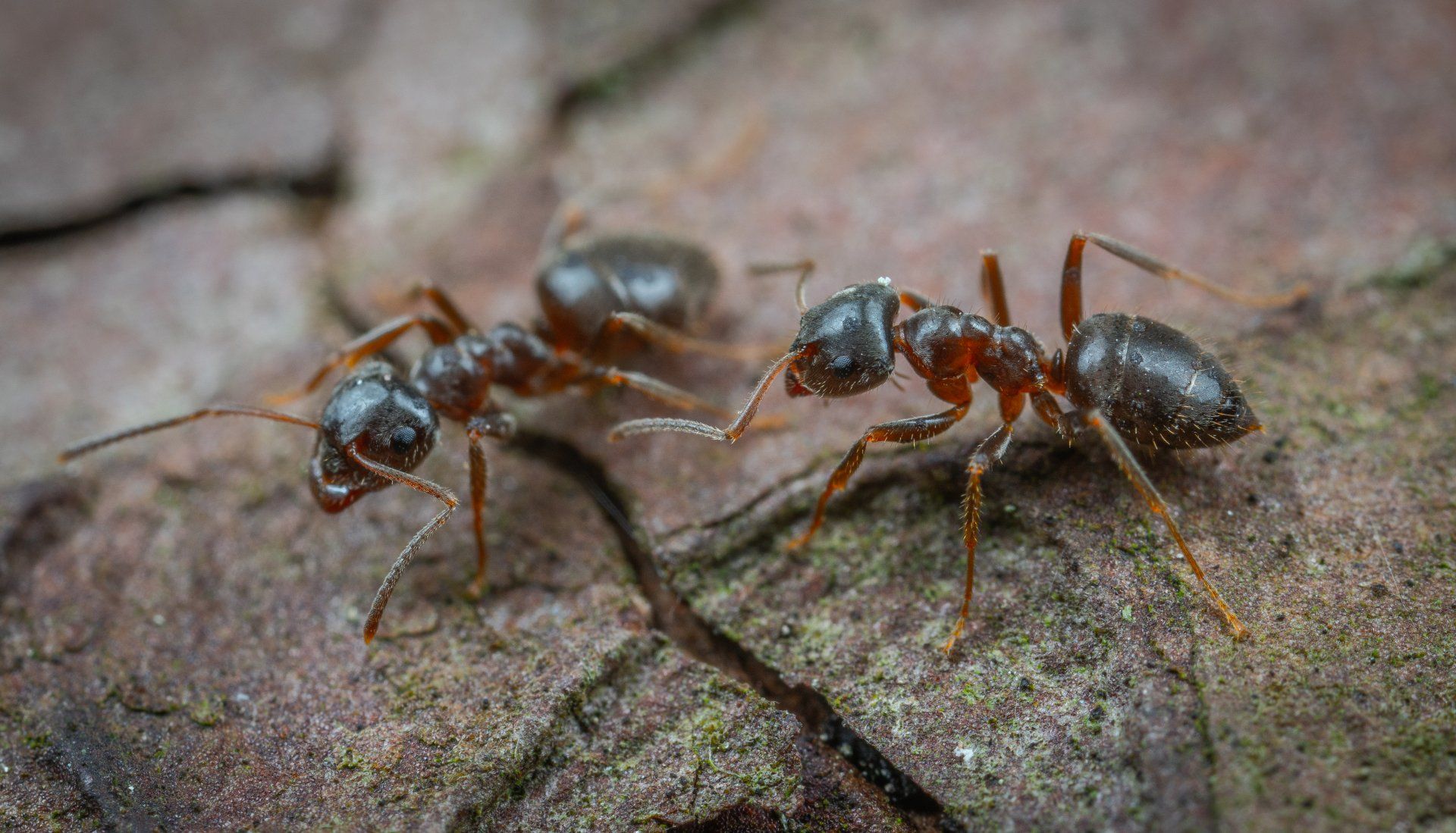
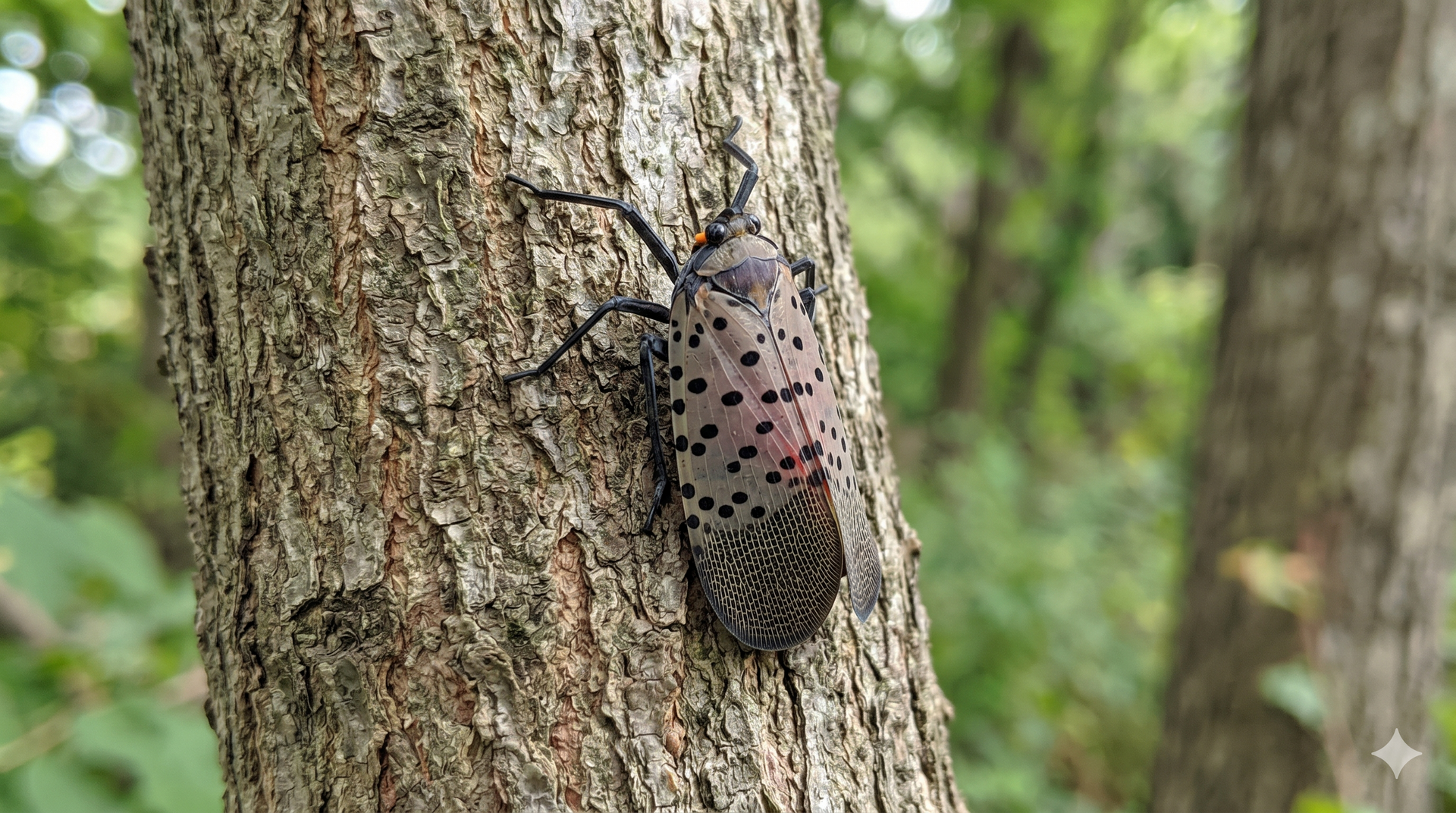
Both have wings, but the differences are clear once you know what to look for. Termite swarmers have a straight waist, straight bead-like antennae, and wings of equal length that extend well beyond their body. Flying ants have a pinched "waist," bent elbowed antennae, and front wings longer than rear wings. If you're finding winged insects inside your home this spring, photograph them and call us — don't treat for the wrong thing.
7 Warning Signs of Termites in Your Calvert County Home
Most termite damage is hidden. But there are signs — and knowing them can be the difference between a treatment job and a structural repair. Here's what to watch for:
- 1Mud Tubes on Foundation Walls or Piers
Subterranean termites build pencil-width mud tubes from the soil up to wood. You'll find them on foundation walls, crawl space piers, floor joists, and along block walls. They look like thin tunnels of dried earth running vertically or diagonally. Finding one is definitive evidence of active termite presence. Check your foundation exterior and crawl space every spring.
- 2Termite Swarmers or Discarded Wings
As described above — finding swarmers or piles of shed wings (which they drop almost immediately after landing) near windows, doors, or light fixtures inside your home is a serious red flag. Finding them outside near your foundation is also worth attention.
- 3Wood That Sounds Hollow When Tapped
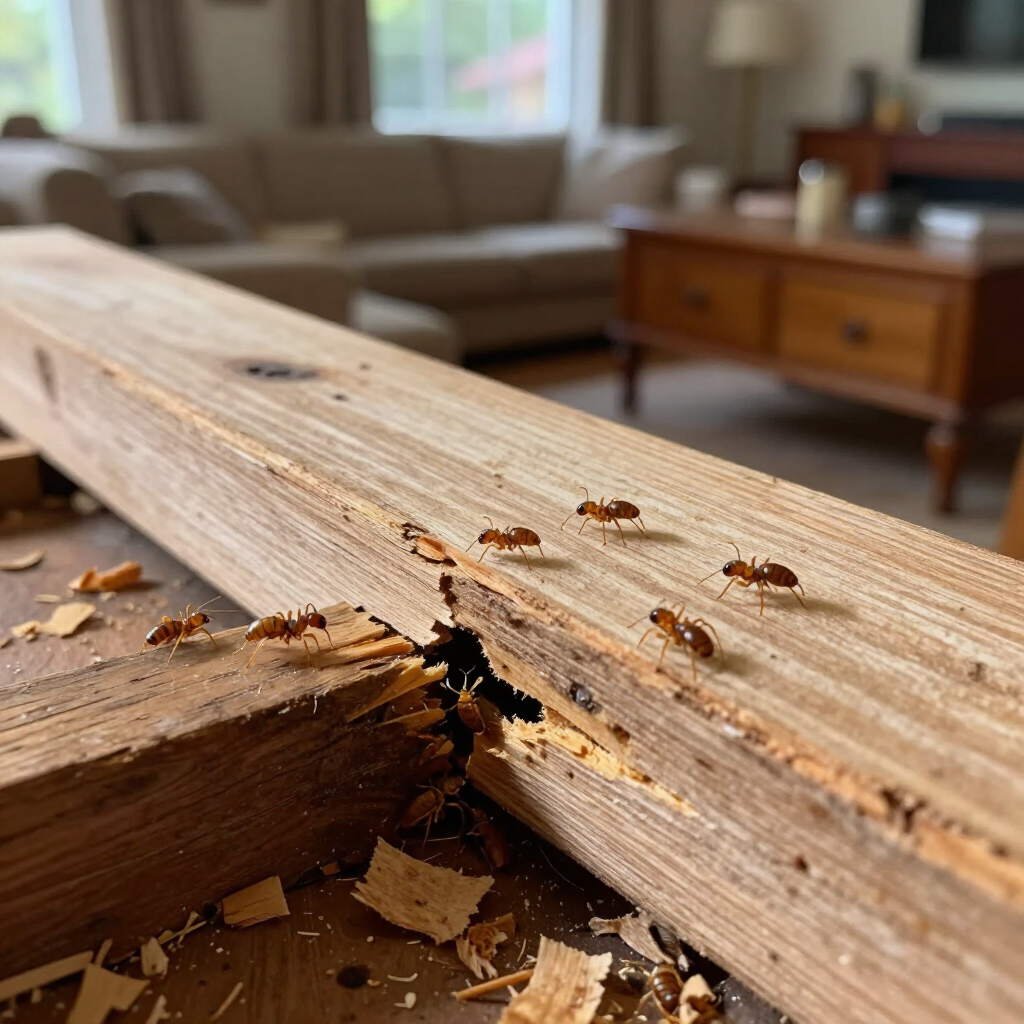
Termites feed from the inside out, leaving a thin veneer of wood on the surface. Tap along baseboards, window frames, door frames, and floor joists with a screwdriver handle. Wood that should be solid but sounds hollow or papery has likely been excavated from within.
- 4Blistering or Bubbling Paint on Wood Surfaces
Termites introduce moisture as they work. On painted wood surfaces, this can cause paint to blister or bubble in patterns that look like water damage — even when there's no water source nearby. It's easy to mistake for a plumbing issue. If you can't identify the moisture source, consider a termite inspection.
- 5Tight-Fitting Doors or Windows That Used to Work Fine
As termites damage wood framing, the structure can subtly shift or warp. Doors and windows that were fine last year and are now difficult to open or close — without any obvious cause — can indicate structural changes from termite activity in the framing.
- 6Frass (Termite Droppings)
This one is more relevant to drywood termites, which are less common in Calvert County than subterranean species. But if you find small, pellet-like droppings that resemble sawdust or coarse sand near wood surfaces, it warrants investigation. Subterranean termites typically incorporate their frass into their mud tubes rather than leaving it exposed.
- 7Visible Wood Damage in Crawl Space or Basement
This is the one that's hard to catch without actually going into the crawl space. Floor joists with a honeycombed interior — wood that looks like it's been carved into thin parallel layers — is a clear sign of significant termite damage. Most homeowners never look down there. We do, at every inspection.
The Real Cost of Waiting: What Termite Damage Actually Runs
We're not in the business of scaring homeowners. But the cost numbers on termite damage are real, and Calvert County homeowners deserve to have them laid out plainly.
| Damage Level | Typical Timeline to Reach This Point | Estimated Repair Cost |
|---|---|---|
| Localized damage — one joist or sill plate section | 1–2 years of active colony | $300 – $1,500 |
| Moderate damage — multiple joists, partial sill replacement | 2–4 years of active colony | $1,500 – $5,000 |
| Significant damage — floor support compromise, subfloor involvement | 3–6 years of active colony | $5,000 – $15,000 |
| Severe structural damage — framing, load-bearing walls | 5+ years unchecked | $15,000 – $50,000+ |
A professional termite treatment for a typical Calvert County home — before significant damage — runs a fraction of any of those repair figures. The economics of early detection are straightforward. The risk isn't in spending money on an inspection. The risk is in not getting one.
Free Termite Inspections Throughout Calvert County
We inspect crawl spaces, foundations, mud tubes, and every wood-to-soil contact point on your property. If termites are there, we find them. If they're not, you get peace of mind. Either way, the inspection is free.
What a Professional Termite Inspection Actually Covers
A self-inspection of your home's exterior and visible interior might catch mud tubes or swarmer wings. But the places termites do their real work — crawl spaces, the soil-foundation interface, inside wall voids, beneath slabs — require experience and trained eyes to assess properly.
Here's what we check on every termite inspection in Calvert County:
- Full crawl space inspection — every joist, every pier, every beam, every inch of the perimeter. We're looking for mud tubes, frass, hollow wood, and active colonies. This is where most Calvert County termite damage lives.
- Foundation perimeter — the exterior of every foundation wall, looking for mud tubes from the soil up to the structure. We check both the concrete block and the soil line at every point.
- All wood-to-soil contact — deck footers, stair stringers, fence posts, landscape timbers. These are the most common entry points.
- Interior checks — baseboards, window frames, door frames, and any area where hollow sounds or visual damage is suspected.
- Moisture assessment — because termites follow moisture, we identify any areas of elevated moisture that could be attracting or sustaining a colony.
We provide certified Wood Destroying Insect (WDI) reports — the NPMA-33 form required by most mortgage lenders including FHA and VA loans. Fast turnaround, and we know exactly what lenders and Calvert County real estate agents need to close. Learn about our real estate inspection service.
Termite Treatment: What We Actually Do
Once we've confirmed an active infestation, we develop a treatment plan specific to your home's construction, the colony's location, and the extent of the damage. For most Calvert County homes, that means a combination of:
- Liquid termiticide barrier treatments — applied to the soil around the foundation to create a continuous treated zone that kills termites attempting to pass through it. We treat deck footers generously and anywhere wood meets concrete.
- Direct wood treatments — where termites have active galleries inside structural wood, we apply treatment directly to the affected material.
- Monitoring stations — for ongoing protection and early detection of new activity.
We also walk every customer through what's needed to reduce future pressure — addressing moisture sources, wood-to-soil contact, and any conditions around the home that are sustaining termite-friendly conditions. A treatment without that conversation is just delaying the next infestation.
Prevention: What Every Calvert County Homeowner Should Do This Year
The best termite treatment is never needing one. Here's the prevention list we give to every homeowner we work with in Calvert County:
- Keep mulch at least 12 inches from the foundation — ideally further. Consider switching to inorganic mulch near the house.
- Remove all wood-to-soil contact: deck boards, stair stringers, fence posts, and any scrap lumber in contact with the ground near the house.
- Move firewood storage at least 20 feet from any structure and keep it off the ground.
- Fix gutter issues promptly. Overflowing or damaged gutters deposit water right at the foundation — exactly where you don't want it.
- Maintain proper drainage away from the foundation. Standing water near the house is termite bait.
- Inspect and seal foundation cracks every spring. Small gaps are easy entry points.
- Get a professional inspection every three to four years — or sooner if you notice any of the seven warning signs above.
The Bottom Line for Calvert County Homeowners
Termites are not a "maybe" in Calvert County. The conditions here — the humidity, the wooded lots, the older homes, the consistent soil moisture — mean the question isn't whether termites are active somewhere near your property. It's whether they've found your home yet, and if they have, how long they've been there.
The good news is that an infestation caught early is a manageable, treatable problem. We offer free inspections throughout Calvert County — every town from Dunkirk to Solomons — and we can usually schedule quickly. You can also review our termite service page and our real estate inspection service for more detail on what we cover.
Don't wait until you hear the floor flex wrong or a door stops closing right. Call us before those signs appear.
Southern MD Boys Pest Control is a veteran-owned, locally operated pest control company serving all of Calvert County, MD — including Lusby, Prince Frederick, Dunkirk, Huntingtown, Solomons Island, North Beach, and all surrounding communities. Maryland License #32675. 100+ five-star Google reviews. Call or text 443-802-1022.