

If you've lived in Calvert County for any length of time, you've had ants in your home. Maybe a trail of tiny black ones across the kitchen counter. Maybe the big, rust-colored ones that seem to come out of nowhere every spring. Maybe you've found piles of sawdust near a door frame and had a sinking feeling you couldn't quite name.
Ants are the most common pest call we get throughout Calvert County — from Dunkirk down to Solomons, from the Bay side to the Patuxent. And there's a reason for that. The combination of dense tree cover, consistent coastal humidity, and the older housing stock in many parts of the county creates conditions that make ant infestations almost inevitable without proper prevention and treatment.
This post is going to walk you through the ant species we see most often in Calvert County homes, what they're actually doing in your walls, and the point at which DIY solutions stop working and you need a professional.
The Ant Species We See Most in Calvert County
Not all ants are the same — and that matters, because the wrong treatment for the wrong species accomplishes nothing. Here are the four we deal with most often across the county.
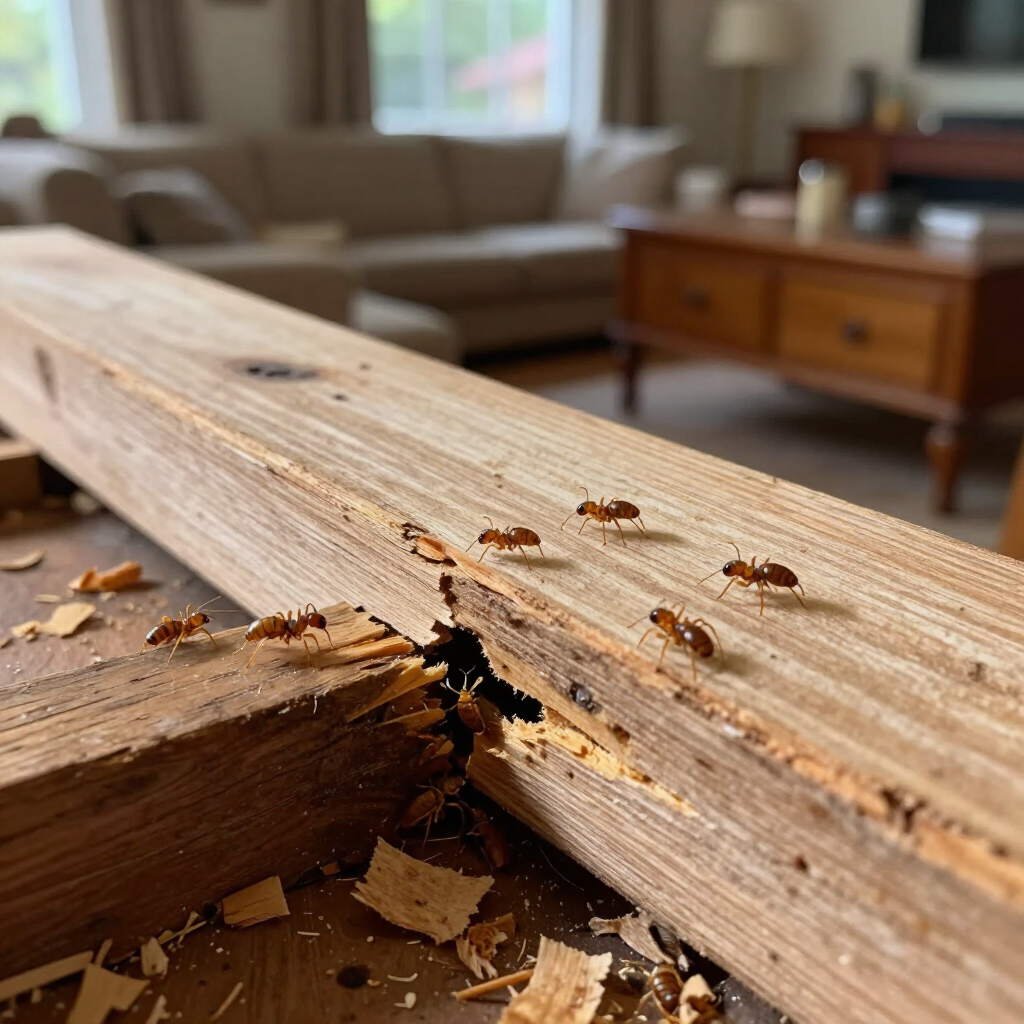
The big ones. Black or dark red, up to ¾ inch long. They don't eat wood — they tunnel through it to nest. In Calvert County, the damp wood around older windows, door frames, and deck posts is their primary target. The damage they cause is real and cumulative.
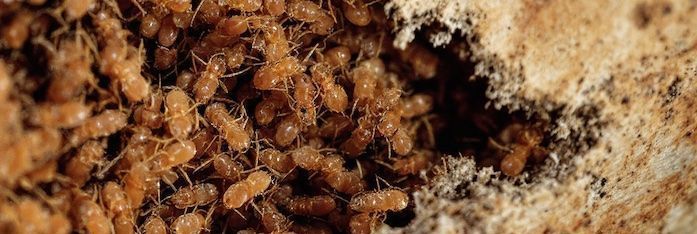
Tiny, dark brown, and they smell like rotten coconut when crushed. These are the ones forming trails across your kitchen counter. They nest inside walls, under flooring, and near any moisture source — and their colonies can number in the hundreds of thousands.
Small, dark brown, found nesting under driveways, slabs, and along foundations. They commonly invade homes during spring and summer. Less destructive than carpenter ants but persistent, especially in homes with slab-on-grade foundations common in newer Calvert County developments.
Tiny (1–2mm), jet black, and often mistaken for young carpenter ants. They nest outdoors in rotting wood, mulch, and under stones — all of which are abundant in Calvert County's wooded neighborhoods — and forage inside for sweets and proteins.
Every spring in Calvert County, we get calls from homeowners who think they have a flying ant infestation — and it turns out to be termite swarmers. The key difference: ants have a pinched waist and bent antennae; termites have a straight waist and straight antennae. If you're not sure, stop and call us before you treat for the wrong thing.
Why Calvert County Is Especially Vulnerable
This isn't just general pest control advice — there are specific things about living on the Calvert County peninsula that make ant pressure higher here than in many other parts of Maryland.
The Tree Line Problem
Many of the most desirable neighborhoods in Calvert County — Chesapeake Ranch Estates, Drum Point, areas around Lusby and St. Leonard — have homes that back directly up to forest. That tree line is the source of most carpenter ant pressure. Colonies live in dead and decaying wood in the forest, and foraging workers travel hundreds of feet to find food and new nesting sites. Your home's damp window frames, deck posts, and crawl space beams are exactly what they're looking for.
The Humidity Factor
Calvert County sits between the Chesapeake Bay and the Patuxent River. The result is consistent, high humidity — exactly the condition carpenter ants and odorous house ants need to thrive. Moisture also causes the slow wood decay that makes homes more attractive targets. Ant infestations and moisture problems almost always go together in this county.
Mulch Too Close to the House
We see this constantly. Landscaping mulch piled against the foundation is one of the single biggest drivers of ant infestation in Calvert County homes. It holds moisture, provides nesting material, and puts ants in direct contact with your foundation. The rule is simple: keep mulch at least 12 inches from the foundation. For ant prevention, further is better.
Older Housing Stock
Dunkirk, Huntingtown, North Beach, Chesapeake Beach — these communities have a lot of older homes. Older homes have more wood-to-soil contact, more foundation cracks, more aging window frames and door sweeps. More entry points, more nesting opportunities. Ants don't need much — a crack the width of a credit card is all the entry point they need.
"One ant in your kitchen doesn't mean one ant in your house. It means there's a colony nearby and a pheromone trail from your food source back to it. Thousands more will follow the same path."
Signs You Have More Than a Minor Ant Problem
There's a difference between a few ants foraging and an actual infestation. Here's what escalates it from annoyance to a call-a-professional situation:
- Sawdust piles near wood structures — especially door frames, window sills, deck posts, or baseboards. This is frass from carpenter ants excavating their galleries. It means they're actively nesting inside your home's structure.
- Trails that keep coming back after you clean them. Pheromone trails can persist and attract new foragers even after you've killed the visible ants. If you clean the trail and more appear within 24–48 hours, the colony is established nearby.
- Ants in multiple rooms — not just the kitchen. When you're seeing ants in bathrooms, bedrooms, and along baseboards throughout the home, the nest is likely inside the structure, not just visiting from outside.
- Hollow-sounding wood — tap along baseboards and door frames with a screwdriver handle. A hollow sound where there shouldn't be one can indicate carpenter ant galleries inside.
- Large ants in winter — finding big carpenter ants inside during cold months almost always means the colony is nesting inside your home's heated envelope, not just visiting from outdoors.
Why Store-Bought Treatments Don't Solve the Problem
We hear this every week from Calvert County homeowners: "I've sprayed everything I can find and they keep coming back." Here's why that happens.
Most over-the-counter sprays are repellents. They push ants away from the treated surface — but they don't kill the colony. In fact, repellent sprays can cause a phenomenon called "budding," where a stressed colony splits and creates multiple satellite nests to survive. You treat one area and end up with ants appearing in two new locations instead.
Bait-based products are more effective in principle — the idea is that foragers carry the bait back to the queen. But they require patience (you must not kill the foragers), correct placement, and the right formulation for the specific species. Carpenter ant bait is different from odorous house ant bait. Using the wrong product accomplishes nothing.
If you want to try bait before calling us, identify the species first. Watch where the trail comes from and where it goes. Photograph the ants. Then buy a species-specific bait and place it directly on the trail — do not spray anything near it. Give it 10–14 days. If it hasn't made a meaningful dent, the colony is too large or too well-established for consumer products.
What Professional Ant Treatment Looks Like in Calvert County
When we treat for ants in a Calvert County home, we don't just spray the visible trail and leave. The process starts with identifying the species — because that determines everything else about the treatment approach.
For carpenter ants, we're looking for the nest, which is almost always in damp or decayed wood. We inspect the exterior first — checking every spot where wood meets soil, every deck post, window frame, and door threshold. We check the crawl space. We find where they're entering and treat both the entry point and the satellite colonies that are often inside the walls.
For odorous house ants and pavement ants, we use non-repellent treatments that foragers carry back to the colony, combined with exterior perimeter treatments to interrupt the foraging chain. The colony has to be killed, not just pushed around.
We also look at what's attracting them — moisture, wood-to-soil contact, landscape mulch against the foundation — and give you specific recommendations to reduce future pressure. A treatment that solves the immediate problem without addressing the underlying conditions just means you'll be calling us again in six months.
Seeing Ants in Your Calvert County Home?
Don't wait until they've found every room. Call or text David directly — we serve every community in Calvert County, from Dunkirk to Solomons Island, and we can usually get there same day or next day.
Prevention: What Calvert County Homeowners Can Do Right Now
Professional treatment handles the active infestation. But reducing the conditions that attract ants in the first place is what keeps them from coming back. Here's what we recommend to every Calvert County homeowner we treat:
- Pull mulch at least 12 inches away from your foundation — further if you have a history of carpenter ant problems.
- Move any stacked firewood away from the house. Keep it off the ground and at least 20 feet from any structure.
- Fix any wood-to-soil contact — fence posts, deck boards, and stair stringers touching the ground are carpenter ant invitations.
- Seal foundation cracks, gaps around pipes, and worn door sweeps. Walk around your foundation with a flashlight and caulk every gap you find.
- Fix leaks promptly — under sinks, around the dishwasher, in crawl spaces. Moisture is the common denominator for almost every ant species in Calvert County.
- Keep food in sealed containers and clean up crumbs and spills immediately. Odorous house ant colonies can be sustained by remarkably small amounts of food.
- Trim tree branches that touch or overhang the house. Carpenter ants use them as highways.
The Bottom Line for Calvert County Homeowners
Ants aren't a sign that your home is dirty or poorly kept. They're a sign that you live in Calvert County, where the landscape is beautiful, the woods are close, and the humidity is real. The properties most prone to carpenter ant problems are often the most desirable — the ones that back up to trees, have real wood decks, and have character.
What matters is catching them early. A carpenter ant problem caught in spring, when you first see the foragers, is a treatment job. A carpenter ant problem ignored for two or three years is a structural repair job. The difference in cost is significant.
If you're seeing ants regularly in your Calvert County home — especially the big ones, or trails that keep coming back after you clean them — it's worth a call. We offer free estimates throughout Calvert County, and we can usually schedule same-day or next-day. You can also learn more about our ant control services for Southern Maryland.
Southern MD Boys Pest Control is a veteran-owned, locally operated pest control company serving all of Calvert County, MD — including Lusby, Prince Frederick, Dunkirk, Huntingtown, Solomons Island, North Beach, and all surrounding communities. Maryland License #32675. 100+ five-star Google reviews. Call or text 443-802-1022.