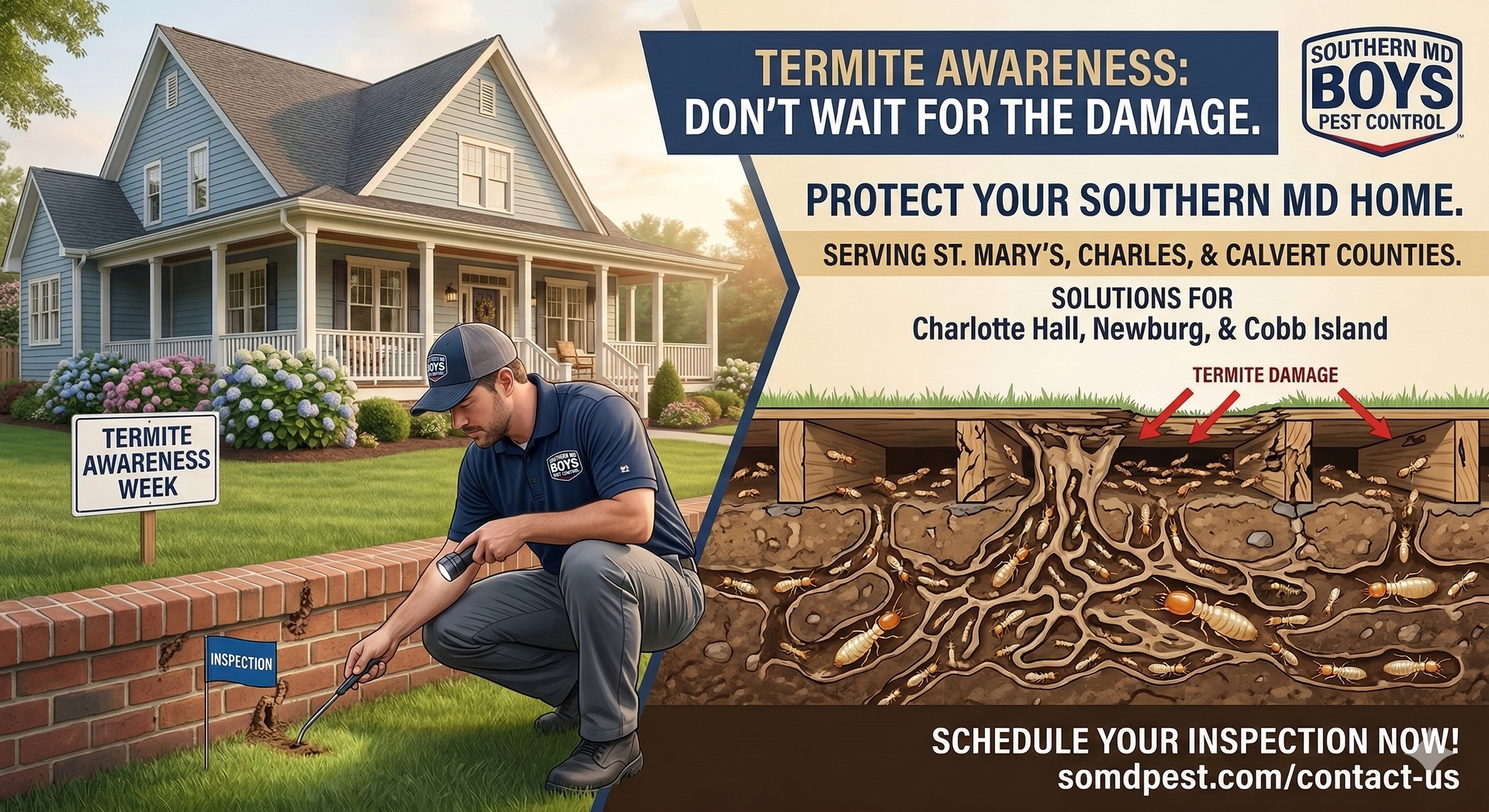


How to Tell If You Have Termites in Your Charles County Home
This is a subtitle for your new post
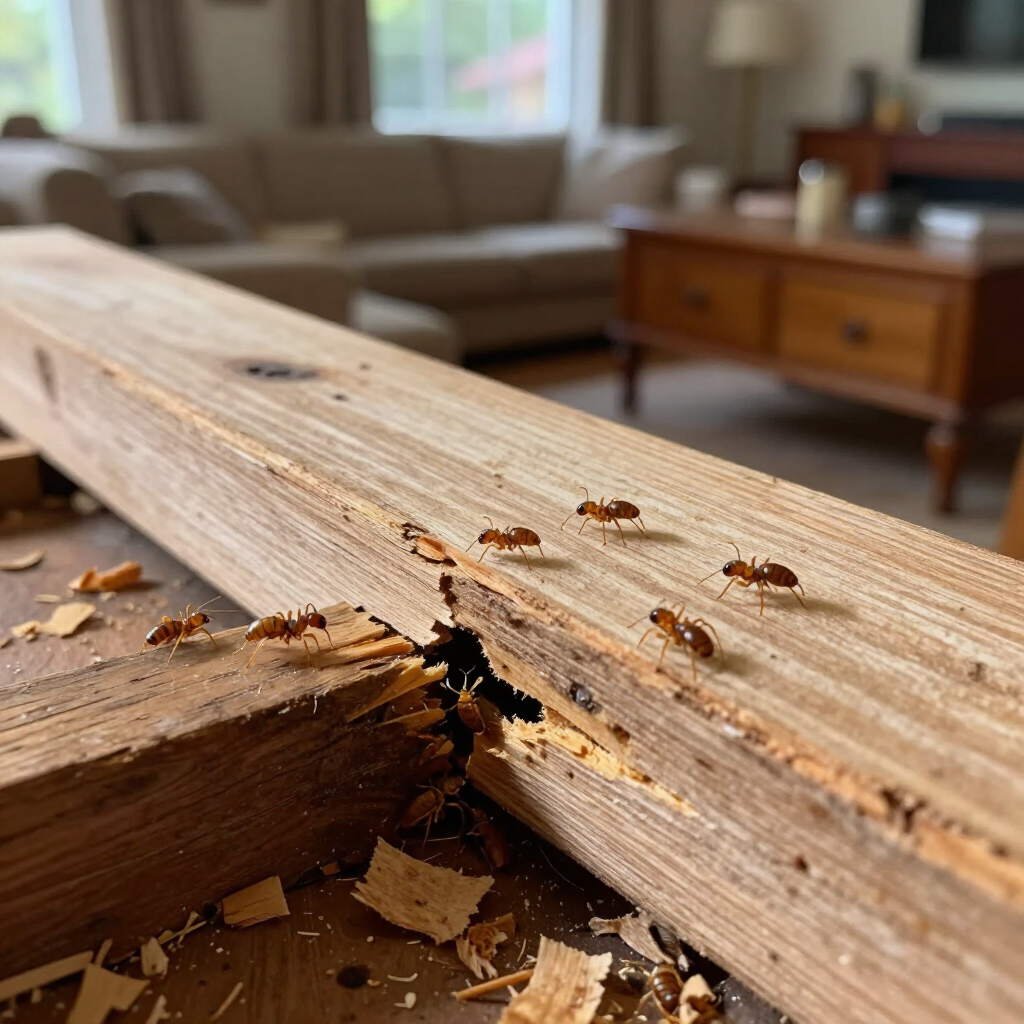
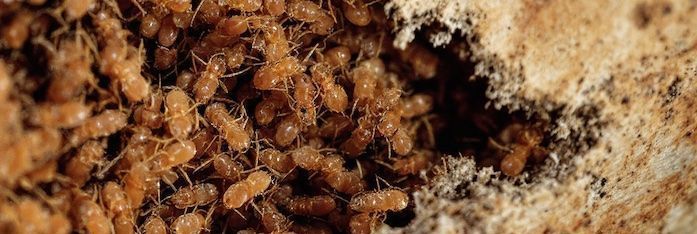
Termites are called "silent destroyers" for a reason. By the time most Charles County homeowners notice something is wrong, the damage is already done — and the repair bills can run into the tens of thousands of dollars. The problem is that termites don't advertise themselves. They work inside your walls, underneath your floors, and deep in your home's framing where you can't easily see them.
Southern Maryland's soil conditions and humid climate make the region one of the more active areas for subterranean termites on the East Coast. If you own a home in Charles County — whether it's a newer build in White Plains or an older property in La Plata or Port Tobacco — knowing the early warning signs could save you from a financial nightmare.
Here are eight signs that termites may already be in your home, and what to do if you spot them.
1. Mud Tubes on Your Foundation or Walls
This is the most reliable visible sign of subterranean termite activity. Subterranean termites — the most common species in Charles County — can't survive in open air. To travel between their underground colonies and your home's wood, they build pencil-thin mud tubes out of soil, wood particles, and debris. These tubes protect them from light and keep them moist while they work.
Check the exterior foundation of your home, along basement walls, crawl space piers, and where the foundation meets the soil. Mud tubes that are thin, brown, and roughly the diameter of a pencil are a near-certain sign of active termite infestation. Even if the tube looks dry or abandoned, don't assume the problem is gone — break a section open. Active tubes will be repaired within days.
2. Swarming Termites or Discarded Wings
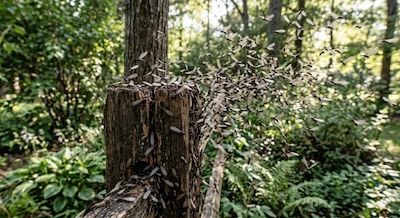
Each spring — typically between March and May in Southern Maryland — termite colonies send out reproductive swarmers to establish new colonies. These winged termites look similar to flying ants but with some key differences: termites have straight antennae, equal-length wings, and a straight body without a pinched waist.
If you see a swarm of winged insects emerging from your walls, windowsills, or soil around your foundation, take it seriously. Even if the swarm itself only lasts 30 minutes, what's left behind matters. Swarmers shed their wings immediately after mating, so finding small piles of wings near windowsills, sliding doors, or light fixtures — even without seeing the swarm — is a clear indicator that a colony is present nearby or already inside your home.
3. Hollow-Sounding or Damaged Wood
Termites eat wood from the inside out, following the grain and hollowing out structural timbers while leaving a thin outer shell intact. Tap on wood surfaces that seem suspicious — baseboards, door frames, window sills, support beams in your crawl space. Wood that sounds hollow or papery when knocked, or that feels soft and gives way under slight pressure, has likely been compromised by termite feeding.
In older Charles County homes especially, check floor joists, sill plates, and any wood in contact with soil. These are the highest-risk areas for subterranean termites.
4. Blistering or Buckling Floors
If your hardwood floors are suddenly buckling, blistering, or developing soft spots that weren't there before, termites may be feeding on the subfloor below. This damage is often mistaken for water damage — and that's a fair comparison, because the appearance is similar. The difference is that termite-damaged floors often have no obvious water source explaining the problem.
Pay attention to areas near exterior walls, around floor vents, and anywhere the floor seems to flex underfoot when it shouldn't.
5. Tight-Fitting Doors and Windows
This one catches a lot of homeowners off guard. If doors and windows that used to open and close smoothly have suddenly become difficult to operate — and there's been no obvious water damage or settling — termites may be the cause. As termites feed through door frames and window frames, the damaged wood warps and swells, causing the frames to shift and bind. Homeowners often blame humidity or the home settling, when the real culprit is active feeding inside the frame.
6. Frass — Termite Droppings
Drywood termites — less common in Maryland than subterranean termites but not unheard of — push their excrement out of small holes in the wood they're infesting. This frass looks like fine sawdust or coffee grounds and tends to accumulate in small piles below infested wood. It's typically dark brown or black in color and pellet-shaped under close inspection.
Finding frass near wooden furniture, walls, or baseboards is a strong sign of drywood termite activity and warrants an immediate professional inspection.
7. Visible Damage Inside Walls
In more advanced infestations, you may start to see damage break through surfaces. This can look like small holes in drywall, paint that bubbles or peels without moisture present, or wallpaper that blisters and separates from the wall. The reason? Termites will eventually eat their way close enough to the surface that the thin outer layer begins to fail. By this stage the colony has typically been active for months or years and the structural damage beneath is likely significant.
8. Damaged Wood in Your Crawl Space or Basement
Most Charles County homeowners never go into their crawl space — which is exactly why termites love it. The combination of soil contact, wood framing, and low human activity makes crawl spaces the single highest-risk area in any Southern Maryland home. If you can safely access yours, look for mud tubes on the piers and foundation walls, soft or darkened wood at the sill plate, and any wood that crumbles when you press on it with a screwdriver.
If you haven't had a professional inspection under your home in the past few years, now is the time.
Why Charles County Homes Are Especially Vulnerable
Subterranean termites need three things: moisture, warmth, and wood. Charles County delivers all three in abundance. The region's clay-heavy soils retain moisture exceptionally well, the humid Chesapeake Bay climate keeps conditions favorable for most of the year, and Southern Maryland's mix of older wood-framed homes and active new construction creates plenty of target material.
New construction is not immune. In fact, disturbed soil from excavation and grading — common throughout the rapidly developing US-301 corridor in White Plains and Waldorf — actually brings termite colonies closer to the surface and closer to new lumber. Termite pressure doesn't slow down just because a home is brand new.
What To Do If You Find Signs of Termites
Do not wait. Termite colonies grow steadily and damage compounds over time. A colony that has been active for two or three years will cause dramatically more damage than one caught in its first season. Here's what to do:
- Don't disturb the area. Avoid removing mud tubes, damaged wood, or frass before a professional inspection. Disturbing the site can make it harder to assess the extent of the infestation.
- Document what you find. Take photos of mud tubes, wings, damaged wood, or frass. Location and context help the inspector assess the situation faster and more accurately.
- Call a licensed professional. Over-the-counter termite products are rarely effective against established subterranean colonies. Professional treatment — including liquid termiticides, bait systems, or both — is required to eliminate the colony and protect your home going forward.
Southern MD Boys Pest Control provides professional termite inspections and extermination across all of Charles County, Calvert County, and St. Mary's County. We're Maryland licensed (#32675), veteran-owned, and have been protecting Southern Maryland homes for over 20 years.
Frequently Asked Questions About Termites in Charles County
How fast do termites cause damage?
A mature subterranean termite colony can contain hundreds of thousands to over a million workers. Under optimal conditions — like Southern Maryland's warm, humid climate — a large colony can cause significant structural damage within 12 to 18 months. Smaller or newer colonies cause damage more slowly, but there is no safe "wait and see" window once termites are confirmed.
Can I treat termites myself?
Store-bought termite products can kill individual termites on contact but do nothing to eliminate the colony or the queen. Subterranean termite colonies live underground and may be located 10 to 20 feet away from where you're seeing damage. Without professional-grade termiticide or a bait system applied correctly around the full perimeter of your home, the colony will continue feeding.
How much does termite treatment cost in Southern Maryland?
Treatment cost depends on the size of your home, the extent of the infestation, and the treatment method used. The best way to get an accurate number is to call for a free inspection and estimate. We'll assess your specific situation and give you a clear, honest recommendation — no pressure, no upsells.
Does homeowners insurance cover termite damage in Maryland?
In most cases, no. Standard homeowners insurance policies in Maryland treat termite damage as a preventable maintenance issue and exclude it from coverage. This makes early detection and preventive treatment even more important — the cost of a professional inspection is a fraction of what termite damage repairs can run.
How often should I have my Charles County home inspected for termites?
Annual termite inspections are recommended for all Southern Maryland homeowners, particularly those with crawl spaces, older wood framing, or homes near wooded areas. If your property has had a prior termite infestation or treatment, inspections every 6 to 12 months are advisable to confirm the colony has not re-established.
Think you might have termites? Don't wait for the damage to get worse. Call Southern MD Boys Pest Control at 443-802-1022 for a free inspection and estimate. We serve all of Charles County including Waldorf, St. Charles, White Plains, Brandywine, Bel Alton, and beyond.
Contact Us